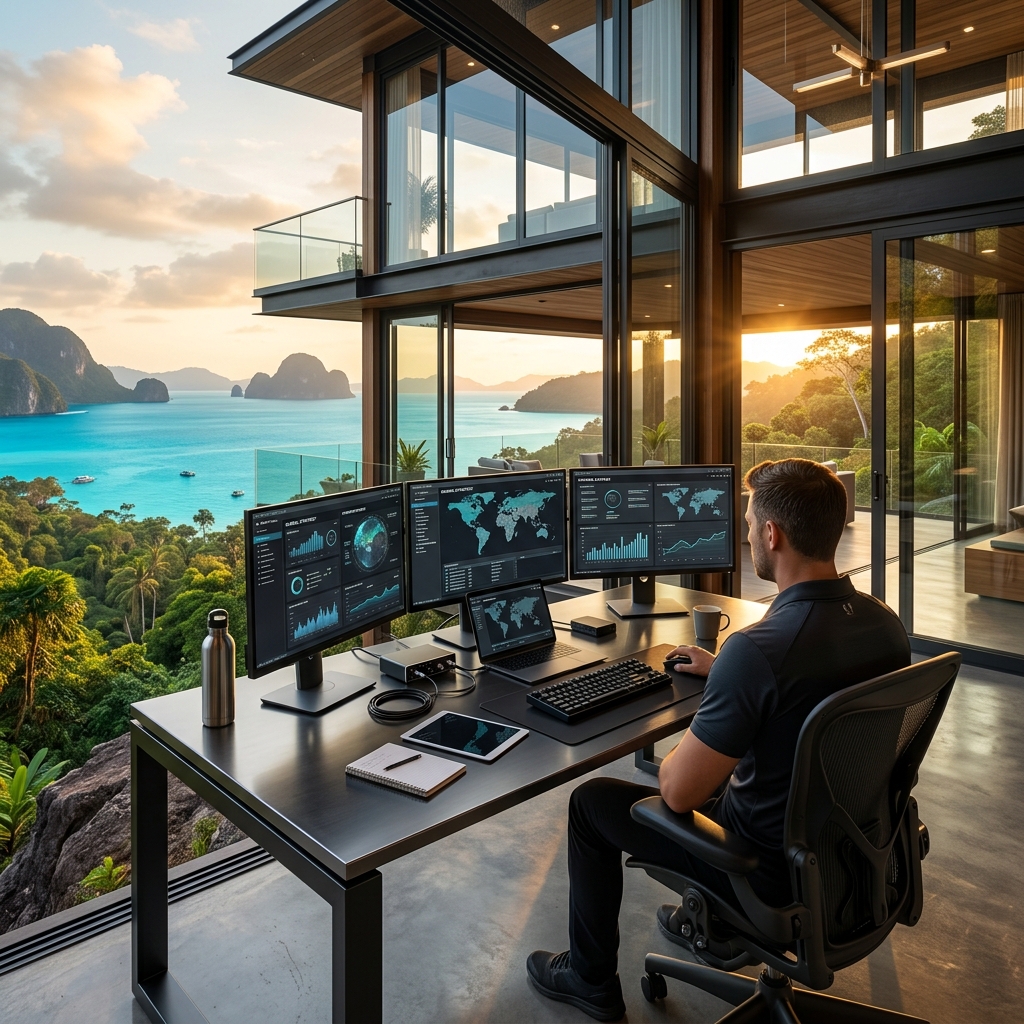
How to Move to Southeast Asia as a Remote Worker: The Full Checklist
Everything you need to move to Southeast Asia as a remote worker — visas, banking, housing, health insurance, and the mistakes most people make on the way.
Moving to Southeast Asia as a remote worker is one of the highest-leverage decisions you can make if you earn in USD and want to accelerate your savings rate dramatically. The cost of living differential between most US cities and countries like the Philippines, Thailand, and Vietnam is large enough to change your financial trajectory within 12 months. But the move requires real preparation. Visa rules, banking setup, housing, health insurance, and tax obligations all need to be sorted before you land — not after.
This is the full checklist, built from actual experience living in the region.
Before You Book the Flight
The biggest mistakes people make when relocating to Southeast Asia happen before they leave. They assume they can figure things out on the ground. Some things you can. These you cannot.
1. Confirm your remote work setup is location-independent
Before anything else, verify that your employer or clients have no restrictions on where you can work from. Some US companies have state or country-specific employment restrictions. Some client contracts include geographic limitations. Read your contract. If you are an employee, confirm with HR in writing. Do not assume.
2. Check visa options for your target country
Visa rules vary significantly by country and nationality. As of 2026:
- Philippines: US citizens get 30 days visa-free on arrival, extendable to 59 days at the Bureau of Immigration. Long-stay options include the SRRV (Special Resident Retiree’s Visa) or the 13A for those with Filipino family. The Philippines does not yet have a formal digital nomad visa — most remote workers extend tourist visas monthly or quarterly.
- Thailand: US citizens get 60 days visa-free. The Thailand LTR (Long-Term Resident) visa is now available for remote workers earning above $80,000 per year — it gives 10-year residency and a work permit. The Tourist visa with extensions is the most common path for shorter stays.
- Vietnam: US citizens get 45 days visa-free. The E-visa is available for 90 days single entry. Long-stay options are limited — most remote workers use visa runs or the business visa route.
- Indonesia (Bali): The Second Home Visa gives 5 or 10-year stays for those who can demonstrate sufficient funds. The Digital Nomad Visa launched in 2023 allows 6-month stays.
Check the official immigration website for your target country before relying on any third-party summary including this one — visa rules change.
3. Sort your banking before you leave
US banks with foreign ATM fee reimbursement and no foreign transaction fees are essential. The two most commonly used by remote workers in SEA:
- Charles Schwab High Yield Investor Checking: Reimburses all ATM fees worldwide. No foreign transaction fees. The standard recommendation for a reason.
- Wise (formerly TransferWise): Multi-currency account, local bank details in multiple countries, low conversion fees. Pairs well with Schwab for local transfers.
Set both up before you leave. Schwab requires a US address and can take 1 to 2 weeks to process. Wise is faster but does not replace a proper bank account.
Housing: What to Do and What to Avoid
Do not book long-term accommodation before you arrive. This is the most common expensive mistake first-time relocators make. You need to be on the ground to know which neighborhoods suit your work schedule, internet reliability, noise level, and daily routine.
The right sequence:
- Book 2 to 4 weeks in a serviced apartment or quality Airbnb in your target city
- Use that time to explore neighborhoods, test internet speeds, and visit apartments in person
- Sign a lease only after you have lived in the area for at least two weeks
For Cebu City specifically, neighborhoods worth evaluating include IT Park, Lahug, and Banilad — all have reliable fiber internet, proximity to coworking spaces, and a strong expat and remote worker community. Monthly rent for a furnished one-bedroom in these areas ranges from $350 to $700 USD depending on the building and amenities.
For Chiang Mai, the Nimman and Santitham areas have the highest concentration of remote workers, coworking spaces, and reliable infrastructure. Monthly rent for a furnished studio or one-bedroom runs $300 to $600 USD.
For more on the specific neighborhoods worth considering in Cebu, read Best Neighborhoods for Remote Workers in Cebu City: The Full Breakdown.
Internet: Your Most Important Infrastructure
Everything else about SEA is flexible. Internet is not. Before you sign any lease, test the internet in the unit. Not the building’s WiFi — the actual connection in the apartment you are considering.
Unlock the Full Breakdown
Join 65+ Founders to unlock the full technical breakdown and receive exclusive engineering insights.
Check Your Inbox
Reply hi to confirm your email
This keeps us out of your promotions tab
Unlocking your access now...
[ ERROR: CONNECTION_TIMEOUT ]
[ SYSTEM SECURED: EMAIL REQUIRED ]
Sponsored by Me
Galaxy Arbitrage Newsletter
Geo-arbitrage, remote income systems, and AI tools — delivered free every week. 65+ subscribers and growing.
Get Free Weekly Intel →Written By

Tony Long II
@galaxybuilt
Solopreneur, systems architect, and founder of Galaxy Arbitrage. I left the traditional income trap and built a location-independent business from Southeast Asia. Now I document exactly how through weekly intel on geo-arbitrage, remote income, and automation. If you earn in dollars and spend in pesos, this is for you.
Keep Reading
Free Weekly Newsletter
GET THE INTEL
EVERY WEEK.
Geographic arbitrage, remote income systems, and AI tools — delivered free every week. Plus 4 resources on signup.
Join Free — Get All 4 Resources →✓ Weekly Intel · ✓ 4 Free Resources · ✓ No Spam
Comments
via GitHubComments Coming Soon
Have thoughts? Reply on X / Twitter or YouTube.